A sealing-jaw replacement can fit the machine and still produce cold ends, slow recovery, lead failures, or unsafe electrical loading. Before requesting a quotation, you need a specification that separates the heater from the jaw hardware, proves the power calculation, and defines how the finished part will be tested.
Key takeaways
- Send jaw dimensions, material, cycle time and temperature range before requesting prices.
- Calculate heater current from power and voltage before approving the quotation.
- Specify lead position, insulation, control sensor and acceptance tests in writing.
- Compare quotations by fit, heat distribution, testing and replacement support—not wattage alone.
Build the purchase specification from the machine and sealing process
If you are sourcing sealing jaw heaters for specifications in Pune, send the machine and sealing-process data before asking for a price. Wattage alone cannot determine the correct construction, fit, or heat distribution.
1. Identify the machine make, model, jaw type, sealing length, heater quantity, installation position, and whether one or both jaws are heated. State the operating cycle: heat-up time, sealing temperature, dwell time, cooling interval, cycles per minute, and continuous or intermittent operation.
2. Describe the load the heater must heat: jaw material, jaw mass, contact area, insulation, ambient temperature, film or laminate type, and target temperature. Include available supply voltage, phase, and the number of independent heating zones. These details let the supplier select watt density instead of guessing from watts per unit length.
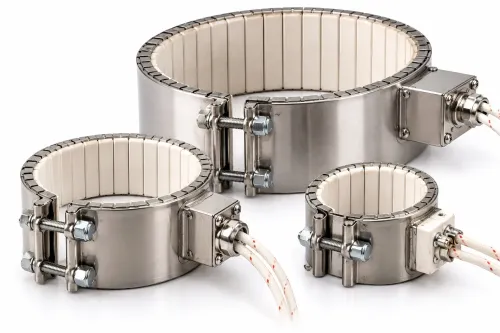
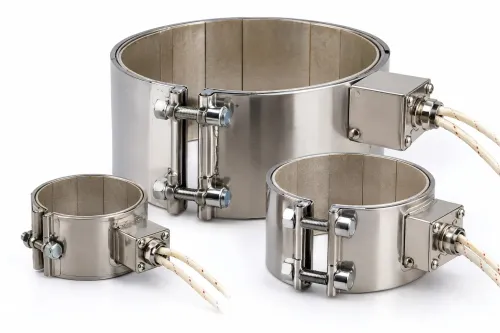
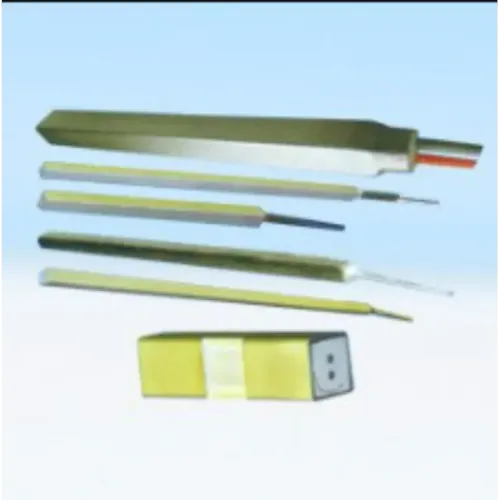
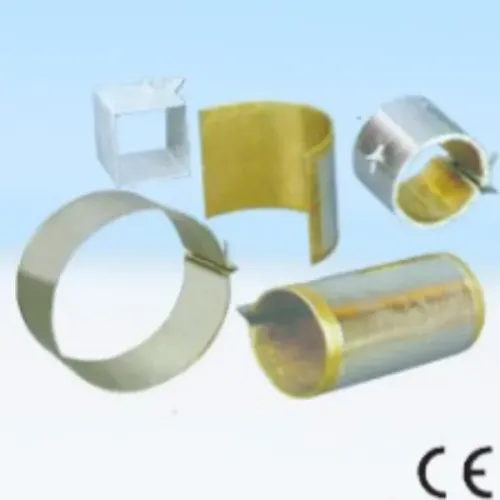
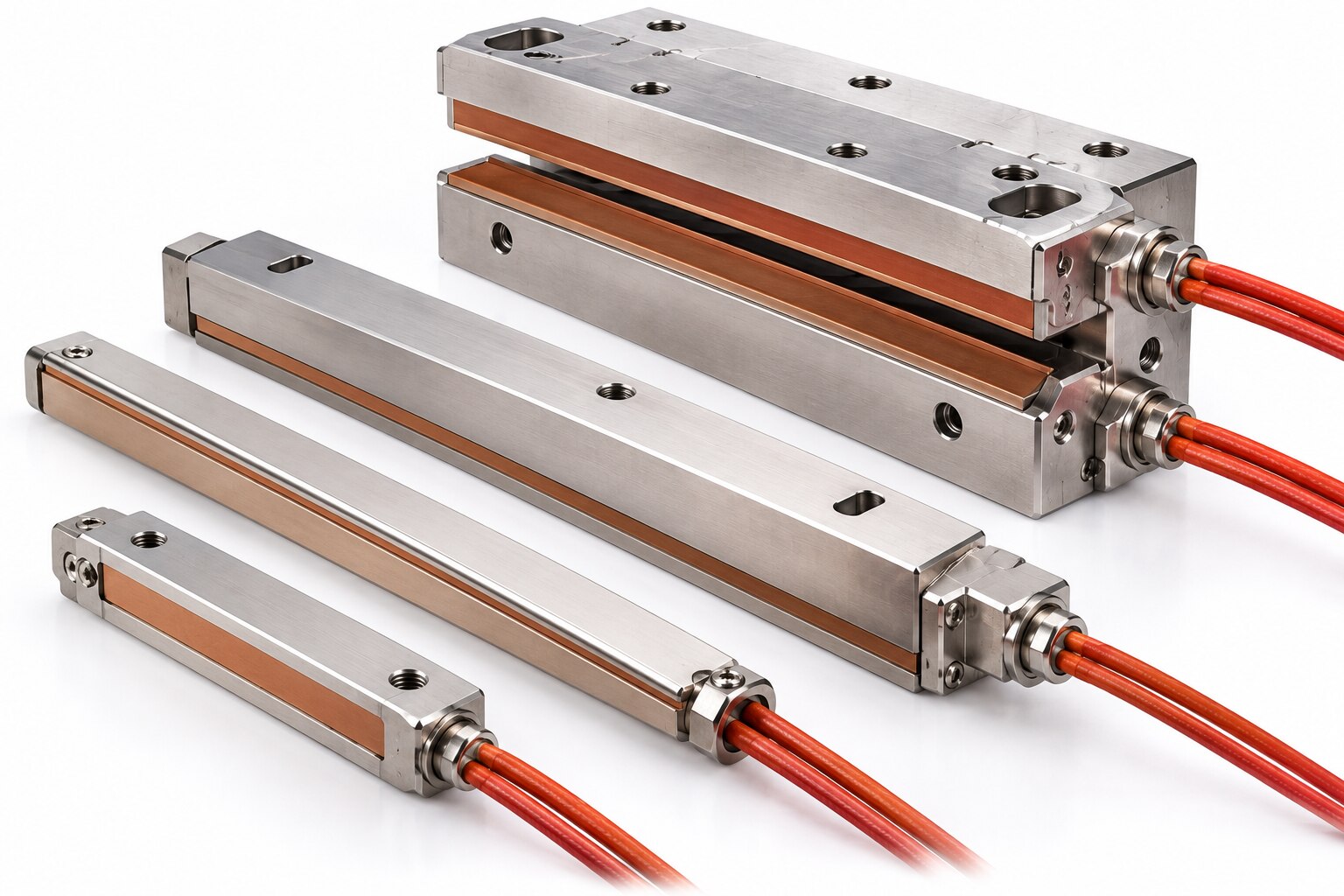
3. Specify the construction you need or ask the supplier to recommend one: cartridge, mica-insulated strip, etched-foil or flexible, ceramic, or cast-in heater. Construction controls maximum temperature, allowable bending, minimum bend radius, repairability, and how closely the heater follows the jaw profile.
4. Send a dimensioned drawing that separates heater dimensions from the machined jaw pocket, clamping plate, insulation layer, and retaining hardware. Show overall and heated length, width, thickness, holes, slots, corner radii, bends, terminal spacing, lead-exit direction, and tolerances.
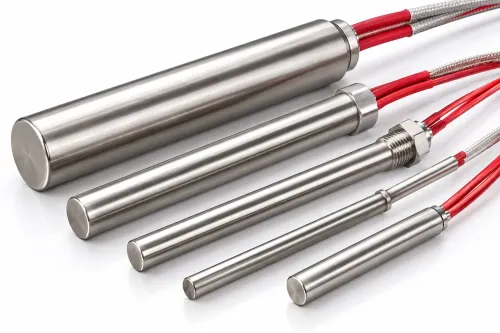
For cartridge heaters, add diameter, heated and unheated lengths, bore depth, fit, straightness, insertion depth, and removability.
5. State lead length, insulation, strain relief, flexing, bend location, minimum bend radius, terminal style, and lead-exit temperature. This information prevents a heater that passes a resistance test from failing when the jaw moves.
Record heater dimensions without copying a damaged sample
Measure the sealing jaw heater dimensions from the machine’s jaw, pocket and drawing—not from a bent, swollen or burnt heater. Record overall length, width and thickness; heated length; unheated sections; hole and slot diameters; hole centres; terminal spacing; lead-exit position and direction; bend profile; corner radii; and the allowable tolerance.
For a cartridge heater, add cartridge diameter, heated and unheated lengths, bore depth, insertion depth, bore fit or tolerance, hole straightness and whether the element is removable. Excessive bore clearance creates hot spots; a tight or distorted bore can prevent insertion and crush the cartridge during thermal expansion.
| Dimension source | Use it for | Do not use it for |
|---|---|---|
| Jaw pocket and machined drawing | Heater envelope, insertion depth, hole centres and clearance | Assuming the pocket equals the heater’s heated zone |
| Undamaged mating heater or spare | Lead layout, terminals, bends and construction details | Copying a sample that has bowed or stretched |
| Damaged heater | Identifying failure location and approximate construction | Setting final length, flatness, radius or thickness |
Measure the pocket at several points with calipers, a depth gauge and a straightedge. Check hole positions from fixed jaw datums, not from a warped edge. Compare both jaws if they are matched, and verify the proposed cold sections against the sealing length so a short heated zone does not create a cold seal.
Keep temperature-sensor position on a separate drawing callout. A sensor embedded beside the element does not read the same temperature as one near the sealing face, so its setpoint cannot transfer without validation.
Calculate power, current and voltage before approving the quotation
Approve the quotation only after calculating both warm-up energy and running load. A useful estimate is P = (m × cp × ΔT ÷ warm-up time) + heat losses, where losses include conduction into the jaw, convection, radiation, product heating and heat carried away by film.
Jaw mass alone can produce slow recovery between sealing cycles.
1. Calculate the required wattage from the heater mass, specific heat, starting and target temperatures, warm-up time, and estimated losses. Add the heat needed to restore temperature between cycles, not just the initial warm-up demand.
2. Convert the quoted rating into current with I = P ÷ V. A 1,000 W heater draws 4.35 A at 230 V; two such heaters draw 8.70 A before controller or auxiliary loads.
Check the machine nameplate supply, available circuit current, breaker rating, cable size, contactor or solid-state relay rating, and the simultaneous load of both jaws.
3. Confirm the rated voltage as well as watts or resistance. A 230 V heater connected to 240 V produces about 8.9% more power; at 220 V it produces about 8.4% less. State whether the heaters use one circuit, independent zones, or series/parallel sections.
4. Request a controlled drawing and a certificate listing actual resistance, voltage, power, serial or batch number, sensor type, and test results. Reject “interchangeable with sample” unless lead routing, sensing position and cold-zone length are also controlled.
If the calculated current exceeds the machine circuit capacity, reduce the load through approved zoning or upgrade the electrical system before ordering. Do not approve on wattage alone.
Specify temperature control, leads and acceptance tests
A resistance reading proves continuity, not survivability. Specify the control scheme, sensor location, lead construction and pass/fail tests before the heater is manufactured.
- State rated voltage, wattage or resistance, circuit arrangement, and whether zones require independent control.
- Identify the sensor as a thermocouple or RTD, including type, attachment method and exact position. A sensor near the sealing face will not produce the same setpoint as one embedded beside the element.
- Specify the controller action, setpoint range, alarm limits and an independent overtemperature cut-out. Include the fuse or breaker rating and SSR or contactor arrangement.
- State lead length, conductor insulation temperature rating, terminal style, lead-exit position, strain relief, permitted flexing, bend location and minimum bend radius. Ordinary PVC insulation or a sharp bend at the element termination can fail after repeated jaw movement.
Require a controlled drawing that shows the heater construction, cold zones, sensing position, lead routing and tolerances. “Interchangeable with the sample” is not measurable.
Agree these acceptance tests in advance:
- Cold resistance at a stated ambient temperature, compared with the calculated value at that reference temperature.
- Insulation resistance at a specified test voltage and minimum value.
- Dielectric-strength test at the agreed voltage and duration where applicable.
- Visual and dimensional inspection against the approved drawing.
- Heat-run or temperature-mapping test across the sealing length, including warm-up, steady-state variation and overtemperature-trip operation.
Request a certificate recording actual resistance, voltage, power, serial or batch number, sensor type and every test result.
Compare quotations from a sealing jaw heater supplier in Pune
Do not approve the lowest price until every quotation describes the same heater, installation and evidence. A sealing jaw heater supplier in Pune offering only “replacement as per sample” leaves lead routing, sensor position and cold zones uncontrolled.
| Supplier comparison | Acceptable quotation | Reject or query |
|---|---|---|
| Construction | Names cartridge, mica strip, etched-foil, ceramic or cast-in heater; states bend limits and operating temperature | Gives wattage only |
| Electrical | States nominal voltage, phase, frequency, earthing arrangement, voltage variation and calculated current | Says “standard Pune supply” |
| Mechanical | Includes controlled drawing with length, width, thickness, holes, bend profile, radii and tolerances | Says “interchangeable” |
| Leads | Defines length, insulation, exit temperature, flexing, bend radius, strain relief and terminals | Uses unspecified wire |
| Control | Identifies sensor type, position, calibration, output, relay rating and independent high-limit action | Promises temperature control without safety details |
Ask Saket Enterprises 08048052723, or any comparable supplier, to return the quotation against your drawing revision rather than against a damaged sample.
Approve the order only after receiving:
- A numbered drawing showing heater serial or batch identification.
- A certificate stating actual resistance, voltage, power, sensor type and test results.
- Written confirmation that the supplied construction matches the jaw pocket, insulation and retaining hardware.
- A sample or drawing review for lead-exit location and sensor position before production.
Record the approved revision on the purchase order. A resistance pass alone cannot prove correct heating, safe lead flexing or accurate sealing temperature.
Related product
 | Sealing Jaw Heaters Product Details: Power(Watts) As per customer requirement Voltage As per customer requirement Fostered with a team of highly qualified professionals,... View product → |
Frequently asked questions
What information should you send when ordering sealing jaw heaters?
Send the machine model, jaw material, heated length, available cavity, target temperature, heating time, duty cycle, supply voltage, controller type and lead position.
How do you calculate sealing jaw heater power requirements?
Use the required voltage and proposed wattage to calculate current with I = P ÷ V. Check the result against the controller, wiring and electrical protection ratings.
How should you measure sealing jaw heater dimensions?
Measure the installed cavity and mating surfaces, not only a damaged heater. Record length, width, thickness, bore or slot position, terminal location, lead exit and tolerances.
What should you compare in quotations from a sealing jaw heater supplier in Pune?
Compare dimensional drawings, material, wattage, voltage, lead construction, sensor compatibility, heat-distribution checks, inspection documents, delivery terms and replacement support.
Keywords